Home tour
Queenstown coach day
Glass-roof coach
- Length12 hours
- CancelFree up to 24 hours
- Starts88 Beach Street
Clickable checklist
11-item checklist
Work through the list and tick items. Progress is saved on this device.
0 / 11 ready
All done. Only the date is left to pick for your day on the Milford Road and the fiord.
Secure your spotCan you visit Milford Sound in winter? Yes, and it is often the calmest season. But the road behaves differently: here is how closures, chains, avalanche zones, ice and short days work, and how to plan around them.
Editorial team, milfordsoundtour.quest · Updated November 8, 2026 · A 8 min read
Quick look
Milford Sound does not close for winter. Visit Fiordland notes that visitors travel the Milford Road throughout the year, and RealNZ says its cruises run year-round.1,2 What changes is the road. DOC describes winter conditions, from May to September, as potentially extremely challenging, with snow, ice and freezing temperatures making driving hazardous.3,7 Plan around the road and the fiord takes care of itself.
The surprise is the weather at the water. Visit Fiordland's surprising verdict is that winter is Milford's steadiest season: the days are short, yet clear blue skies are common.8 It adds that snow is seen on the mountains and often reaches low levels, so bring layers, a warm hat and gloves.9 Tourism New Zealand gives winter highs at Milford Sound of about 10 °C, against 19 °C in summer.10
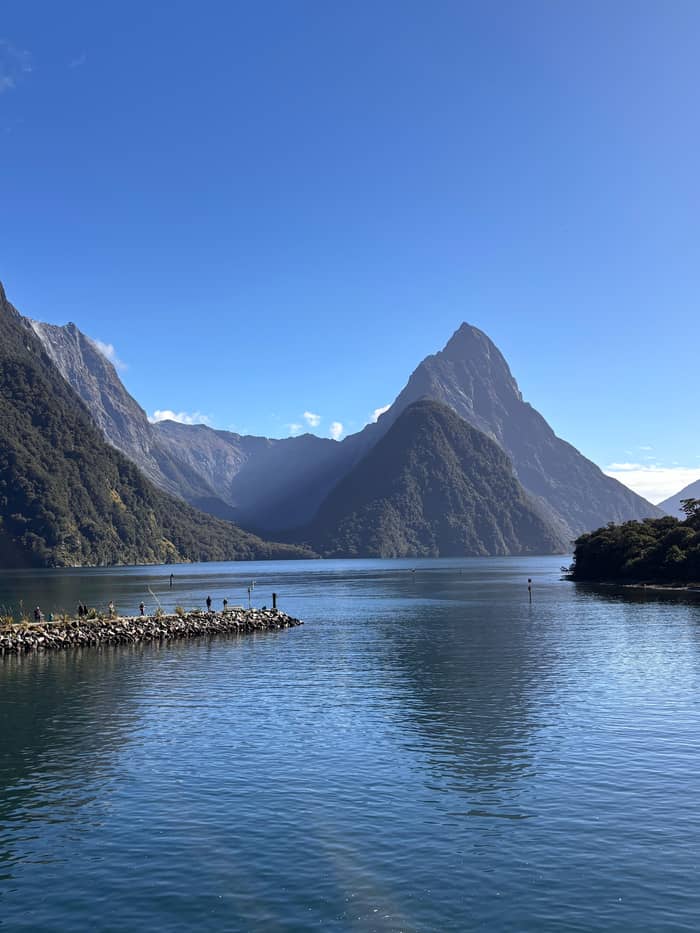
Crowds thin out as well. Traffic drops away after the October-to-April peak, DOC notes.11,12 That means emptier car parks, quieter walks and space at the boat rail. The trade-off is less daylight and a road that can shut at short notice, so winter rewards travellers who keep a day spare and check conditions every morning. A quiet foreshore under snowy peaks is worth that flexibility.
Season by season
| Season | Winter | Summer |
|---|---|---|
| Daylight | Sunrise 8.30 am, sunset 4.30 pm | Dawn 5.30 am, dusk 9.30 pm |
| Highs at the fiord | 10 °C | 19 °C |
| Traffic | Lower | Busiest, October to April |
| Snow chains | Required on signed days | Not needed |
| Avalanche gates | May close | Open |
Daylight from Visit Fiordland, temperatures from Tourism New Zealand, traffic and chains from DOC.6,27,10,11,4,22
Is the road from Queenstown to Milford Sound open? Usually, yes, but check rather than assume. DOC warns that conditions change because of weather, rockfalls, avalanches and maintenance, and that closures and delays are to be expected in winter from snow and avalanches.15,16 Emergency Management Southland says the road is monitored 24/7 by the Milford Road Alliance.17 Treat every forecast of heavy snow as a reason to look again before leaving.
The official status is on the NZTA website, as Visit Fiordland points out, and DOC's brochure gives a phone line, 0800 444 449.18,19 Along the way, DOC's status boards carry the same information: one in Te Anau, one at Knobs Flat, one at the wharf.20 Read the sign in Te Anau before you commit to the mountains, since phone coverage after town is patchy.21 If the sign shows a closure, there is no detour: wait in town, or change the day.
Closures follow a set pattern. Visit Fiordland describes it: crews control avalanches through winter and spring, and when the danger is real the road stays shut until explosives have brought the snow down and machines have cleared the debris.5 DOC's brochure adds that the barrier at Marian Corner comes down whenever motorists face avalanche danger.22 A closure can last hours or longer.
DOC says the usual avalanche months in Fiordland National Park are May to November, though slides can come later while snow lingers.14 On the Milford Road the risk is concentrated in the upper valleys. You can read it in the landscape: DOC notes that where avalanches keep stripping the slopes, mountain ribbonwood, hebe and fuchsia move in, and the panels at Knobs Flat show how avalanches affect the road.30,23
The rule that matters most is simple. Stopping is banned outright on the avalanche stretch, which DOC defines as running from where the Hollyford Road branches off down to The Chasm.26 Its brochure asks drivers to obey the Avalanche Area No Stopping signs.31 That rules out photo stops on the most dramatic part of the drive in winter, including the Homer Tunnel approach. Take your pictures before Marian Corner or after The Chasm.
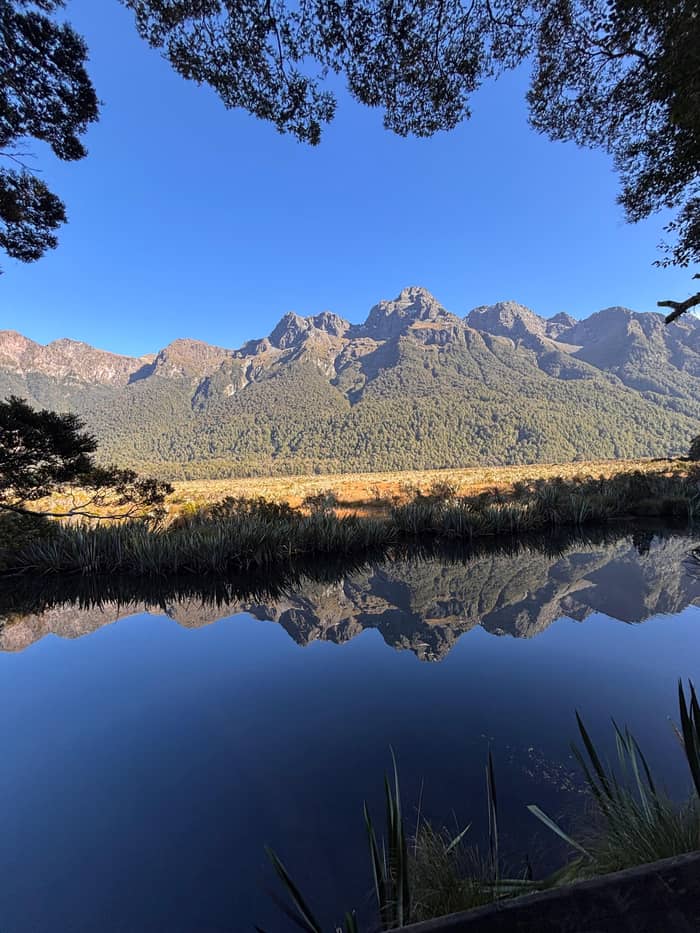
Some walks change too. DOC asks walkers not to go around the edge of Lake Marian during the snow and avalanche season in winter and spring, and does not recommend the Gertrude Saddle Route in winter because of avalanche danger.29,32 The Milford Track outside its Great Walks season is for fit, experienced and well-equipped people only.33 The roadside walks lower down, such as Mirror Lakes and Lake Gunn, stay the safe winter choice.
Drive or ride?
Your winter driving experience is the deciding question.
If I have never fitted snow chains
Take a coach
DOC says to take a coach if you are not confident in winter conditions.28
If I am confident on ice and have a spare day
Drive from Te Anau
Leave from 9 am, when traffic is lighter.12
If I only have one day, from Queenstown
Book the coach day
It covers the whole 12-hour day, cruise included.
If The road is closed on my day
Wait or move the day
Closures last until avalanche debris is cleared.5
If I want to walk as well
Choose the low walks
Mirror Lakes and Lake Gunn suit winter; skip Lake Marian's edge.29
Let someone else drive
Home tour
Glass-roof coach
From Te Anau
Shorter road
Small group
Small group
Chains are the part that worries drivers new to snow, so here is the rule as DOC writes it. Between May and November, when signs say so, every vehicle on the Milford Road has to carry chains or put them on.4 DOC's journey tips say chains may be needed, that Te Anau rents them out, and that drivers should learn to fit them before leaving.34 RealNZ, the operator, makes the same point for winter drivers.37
In practice, hire them at a service station in Te Anau, which DOC's brochure names as the place to get them.4 Practise fitting them in the forecourt on dry ground, wearing gloves, before you need them on a cold verge. Check that the set fits your tyre size and that you know which wheels they go on for your vehicle. Hire companies often have rules about chains, so ask before you leave the rental desk.
Fitting chains is not the only skill winter asks for. DOC warns that ice can stay all day in shaded parts of the road, and asks drivers to take extreme care wherever the road is in shadow.7 There are limited safe passing places, so let faster traffic go by instead of feeling pushed.36 If you are not confident driving in winter conditions, DOC's advice is direct: take a coach.28 There is no shame in it; local drivers do this road every day.
The cold half of the year
May
Chains required on signed days from May to November.4
May to September
DOC's winter season: snow, ice, freezing nights.3
June to August
Sunrise about 8.30 am, sunset about 4.30 pm.6
September to November
More wind and rain than at other times.13
November
Avalanches usually occur from May to November.14
Driving to Milford Sound from Queenstown in winter is a matter of daylight. Visit Fiordland gives sunrise at about 8.30 am and sunset at about 4.30 pm from June to August.6 From Queenstown, DOC reckons on some 4.5 hours of driving each way, without a single stop.38 Add a cruise and the return, and a same-day round trip in winter means driving the mountain road in the dark, which RealNZ advises against: drive in daylight where possible.37
The better plan is to sleep in Te Anau. In winter DOC actually recommends a later start, from 9 am, since the road is quieter.12 That gives the sun time to soften the overnight ice before you reach the shaded bends. Te Anau to the fiord is roughly 2.5 hours non-stop by DOC's estimate, leaving daylight for a cruise and an unhurried return.39 Start back early enough to clear the tunnel well before dusk.
Pack for a stop you did not plan. Emergency Management Southland advises carrying extra food, water, first aid and clothes in case you get stuck, because help takes time to arrive.17 DOC adds sunscreen and insect repellent to the list, and reminds you there is no fuel after Te Anau.21,35 Fill up, pack a thermos, and tell someone your plan, including the time you expect to be back in Te Anau.
Video
A Stray Life on YouTube · Video data is requested only when you tap play.
Snow, ice and freezing temperatures can make driving hazardous, particularly in shaded areas where ice can remain throughout the day.
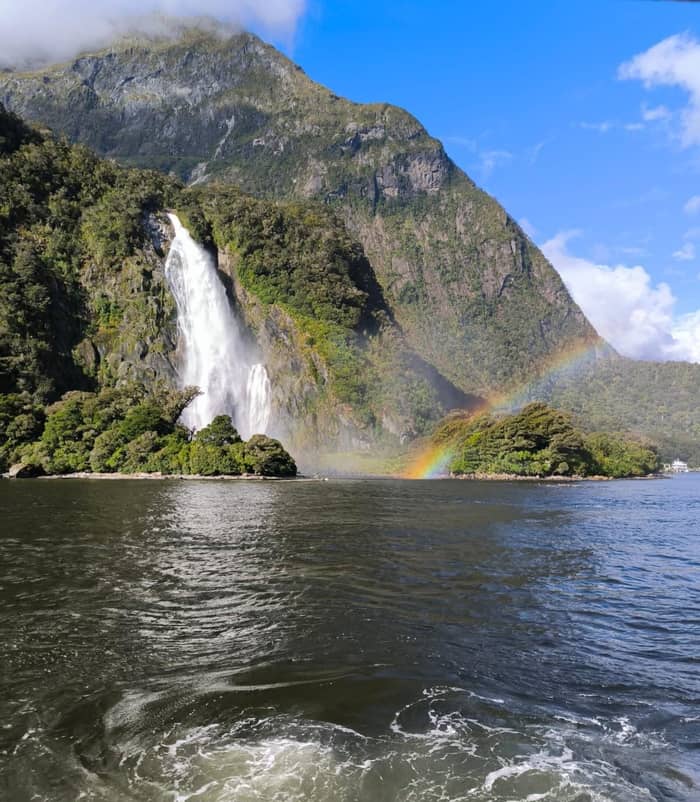
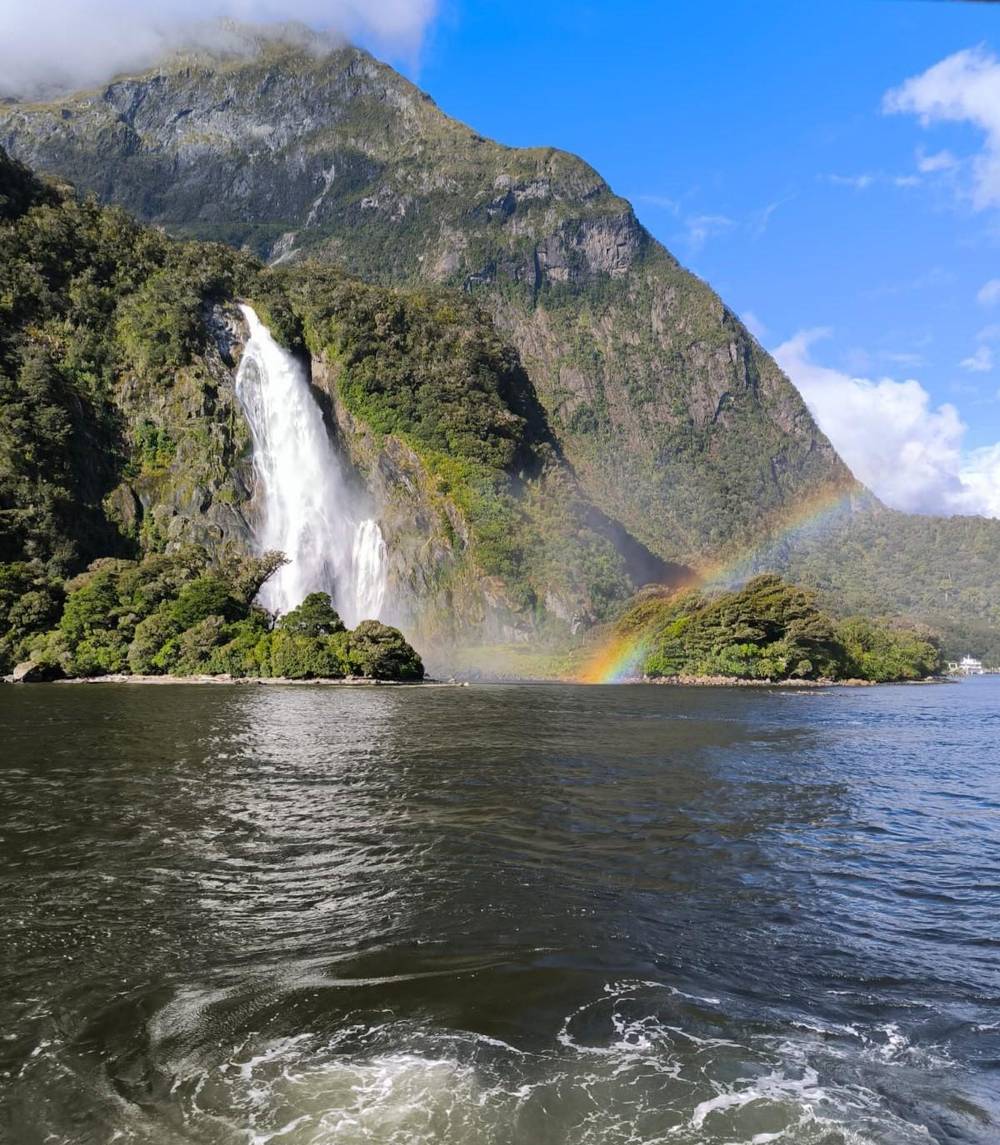
Is Milford Sound worth visiting in winter? For travellers who like snow and quiet, it is the reward season. Visit Fiordland describes a trip into the fiord with snow to low levels as a spectacular event, under skies that are often blue and cloudless.9,8 Waterfalls still pour after rain, the peaks are white, and the crowds of summer are gone. Te Anau itself rarely sees snow, between 1 and 5 times a year according to Visit Fiordland, so the town stays easy to move around.40
Spring is the tricky part, not winter. Visit Fiordland says September to November is the equinox period, with more wind and rain than at other times, and that spring at Milford can be wetter still, with snow sometimes reaching sea level.13,41 Chains are still required on signed days until the end of November, and DOC notes the avalanche risk on the Milford Track can extend into December.4,42 Treat October as winter on the road.
A winter visit also asks for patience. If the road closes, you wait or you change day; there is no other way in by land. Visit Fiordland reminds drivers that heavy rain, ice, snow, fog, wind or debris can appear at any time of year in Fiordland.43 Build your itinerary so that the Milford day can slide by one day either way, and the season becomes a bonus rather than a risk. Keep the rest of the trip flexible around it.
A coach takes the road off your hands. This site's recommended tour covers the 12-hour Queenstown round trip, and a booking dropped at least 24 hours ahead costs nothing, handy when snow is forecast. Its driver deals with the chains, the ice in the shade and the tunnel lights, and its glass roof shows the snow on the peaks above. RealNZ itself points winter visitors who would rather not drive on ice to its Queenstown coach day.44
Should the road shut on the day, the operator decides the next step, so check what it promises in that case before paying, and leave a free day in reserve. The site's tour costs from $172. For a shorter winter day, a coach and cruise from Te Anau runs 8 hours, from $109. Both remove the need to hire chains or practise fitting them, and both leave you free to watch the snow instead of the road.
Self-drive still makes sense for confident winter drivers with a flexible schedule and a night in Te Anau. Visit Fiordland's view is that the drive is safe for a confident and considerate driver.45 Whichever you choose, the rules are the same: check the road status, carry warm layers, stop only where it is allowed, and let the mountains set the pace. In winter, the slower plan is the better one.
FAQ
All vehicles must carry or fit chains when signs require it; hire them in Te Anau.4
DOC says avalanches can also happen outside that period when snow remains.14
Avalanche danger makes it a no-stopping stretch, DOC says.26
RealNZ says its cruises operate year-round.2
Tourism New Zealand gives winter highs of 10 °C, against 19 °C in summer.10
Sources
Coach, plane or helicopter to Milford? A real person helps you choose.